

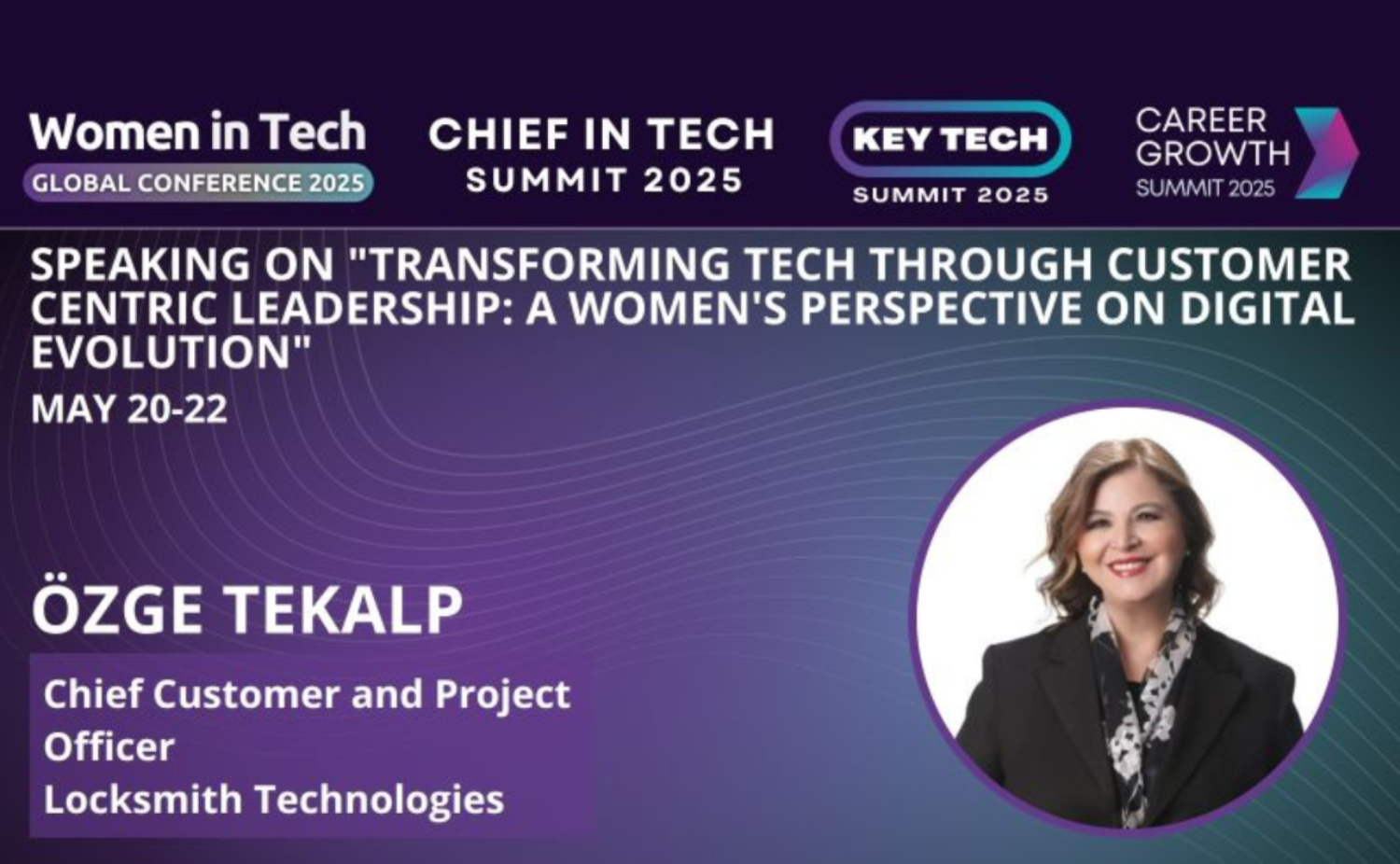
I was privileged to share the stage with other inspiring speakers at the 6th edition of the Women in Tech Global Conference 2025 on May 20. My session was called, “Transforming Tech with Customer-Centric Leadership: A Women’s Perspective on Digital Transformation”, and I spoke about how female leaders could have a particular impact on innovation and how to manage organizational change in the digital world.
I am going to use this opportunity to present some of the main notes and highlights of my speech. The real test of innovation is much more than technical sophistication in an age of swift technological change. It is in our power to make a significant change and retain customers as the main focus of digital transformation. The input of women leaders is even more crucial in both the development of customer-centric technology solutions and change management.
The Customer-Centric Advantage
The economics of customer-centricity is strong. According to Forrester, companies focusing on customer experience beat their competition by 80 percent in growing revenues. Also, companies that have women on top management are 21% more likely to have above-average returns stated McKinsey. These stats point not only to the essentiality of customer-focused behavior but also to the exclusive contributions women make as tech leaders. The feminine attributes of leadership, care, cooperative decision making, and multi-faceted problem solving are needed to develop technology which is truly human serving.
It is true what Satya Nadella once says, namely, that technology is supposed to serve humanity, and not vice versa. The latter view has informed my technology leadership experience where I have learned that we must incorporate emotional intelligence into our development cycles.
Practical Strategies for Customer-Centric Leadership
To develop a culture of customer-centricity, we have to adopt effective strategies that are feasible to change our organizations. Three important methods are as follows:
- Deep Listening Systems: Institutionalize methods of listening to your customers. This entails the establishment of customer advisory boards on a regular basis and making sure there is a direct involvement of leadership with customer service teams. As an example, Airbnb has a program called “One Home” where executives are encouraged to stay in listings as guests so that they could get invaluable insights into the customer journey.
- Empathy Translation Framework: It is essential to make customer emotions development priorities. This can be facilitated by the 3E Method: Experience, Empathize, Evolve. Products leaders should use products with customers in the real world, capture emotional journey maps, and kick off development sprints with customer quotes, not technical specifications. The financial products offered by Ellevest, taking into consideration the specificities of the female experience, are an example of such a framework.
- Inclusive Design Thinking: Shift to values-based design, rather than persona-based, and make sure to take into consideration the views of all users. This would imply developing inclusion usability testing guidelines and bias checks in the product development process. The ability of Bumble to redefine the dynamics of online dating to respond to the issue of safety is an inclusive design.
Change Management Framework
Embarking on customer-centricity does not just need wishful thinking but a solid change management model. There are various change management methodologies that can be implemented based on the structure and magnitude of the project or transformation. One of the structured method to digital transformation is the 5C Framework (Clarity, Communication, Capability, Collaboration, Continuity).
- Clarity: verbalize an appealing customer-focused vision that ties every activity to customer value.
- Communication: Imbue the multi-directional flow of information through transparency to develop psychological safety in teams.
- Capability: Train teams on human-centered design to increase the capacity to develop customer-oriented solutions.
- Collaboration: Silos & Cross-functional teams Once silos are broken, the teams should be built around customers.
- Continuity: Maintain the transformation practices through transformation quick wins celebrations, and customer impact stories.
Building Inclusive, Feedback-Driven Development
Establishing a never-ending feedback ecosystem is the core constituent of customer-centric leadership. This involves:
- Listening: Include regular qualitative feedback mechanisms to pick up customer moods.
- Learning: Build systems of analysis that transform feedback into practical knowledge.
- Pivoting: Develop rapid feedback loops that can enable dynamic product plans depending on customer demands in real-time.
- Changing: Integrate learning in the organizational genes, identify and reward innovations that are customer focused. Such practices are HubSpot and Canva that are constantly ranked as category leaders due to their abilities to incorporate customer feedback into their developments.
Actionable Steps to Get Started
We as leaders can make the changes beginning today. Eight particular actions you can take right now are as follows:
- Follow a customer service call and experience the user experience yourself.
- Make customer feedback a priority by introducing a Customer Voice section in all of your product meetings.
- Make vulnerability approaches by telling your team about your own user problems.
- Construct a feedback speed squad having a delegate of all divisions.
- Ask “How might we? meetings to turn complaints into innovation problems.
- Look at all metrics and analyze them through the prism of customer impact to align with customer requirements.
- Book in regular, monthly, no-tech discussions with a variety of customers to gain enlightenment.
- Develop a policy of exception criteria in which the welfare of the customers is more important than sunk costs.
Conclusion: Your Leadership Legacy
When we think of our own responsibility as leaders, we should keep in mind that technology is all about people and their development. It is not only good business but also an ethical requirement in a customer-centric leadership.
Each of us has the opportunity to shape not just what we build, but also why and how we build it.
Let’s embrace the courage to lead this transformation and ensure that our innovations genuinely reflect the needs of all users.




What do you think?
This strategic reallocation of resources can help companies create a significant competitive advantage.
Comments are closed.