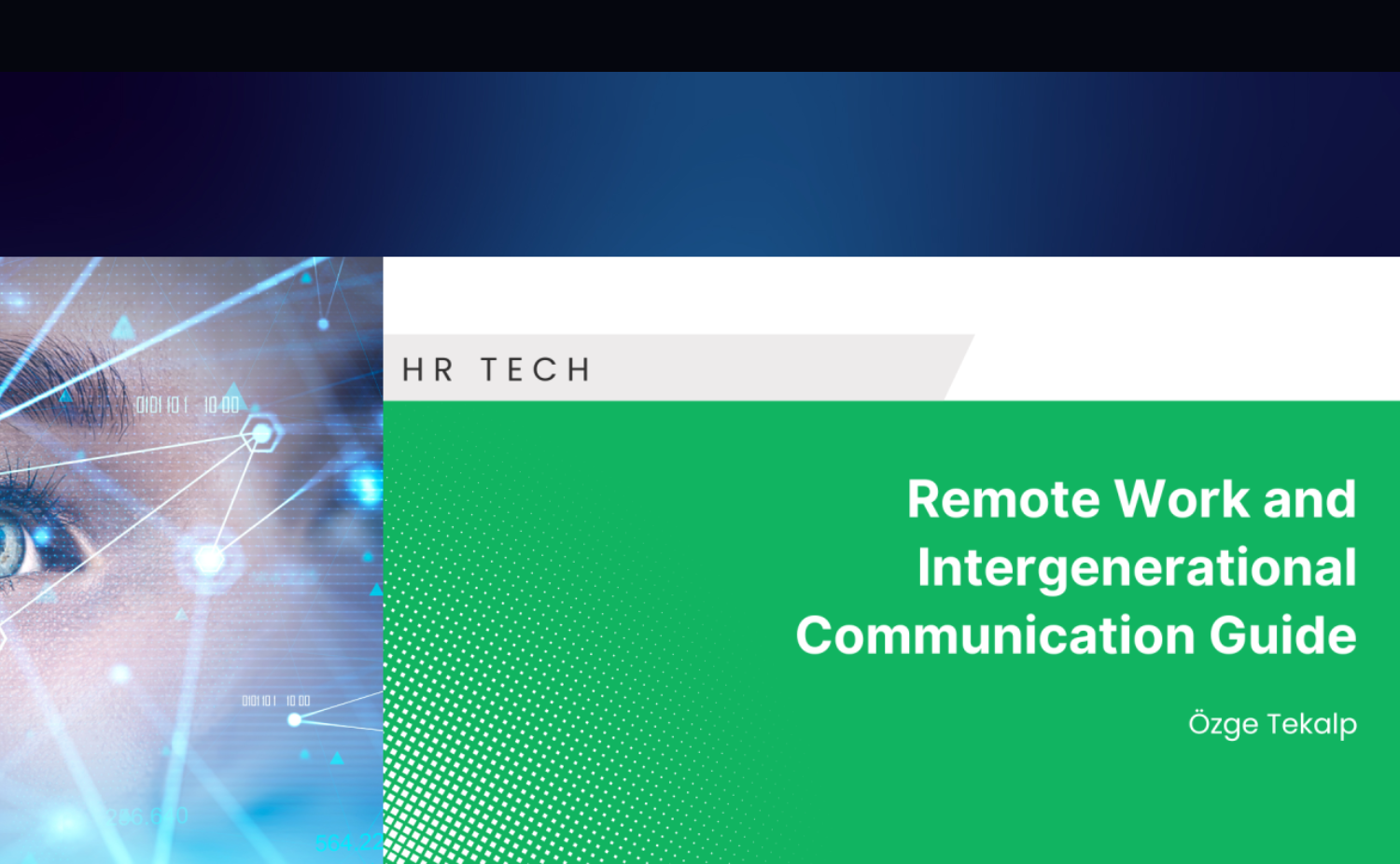
Remote work has become a rapidly spreading practice in today’s business world. The remote work model that became widespread during the Covid pandemic has actually been applied globally for many years.
With the end of the pandemic, fully remote work practices decreased, transitioning to hybrid or office-based work arrangements. Hybrid or fully remote work practices continue to add positive value to companies in line with productivity, management of teams in different countries/cities, adding successful experts from abroad to teams, ensuring work-life balance, and employee expectations.
According to the UK Remote and Hybrid Work Statistics report published in Forbes on July 8, 2025 (Forbes – Remote Work Statistics):
- 28% of working-age adults in Great Britain preferred the hybrid work model between January and March 2025.
- The proportion of hybrid workers has gradually increased since March 2022.
- The proportion of workers who only commute to work has been declining.
- Workers with “diploma or equivalent” qualifications are 10 times more likely to work hybrid than without diploma or equivalent workers.
- Hybrid work has increased among workers in higher income groups.
- Workers aged 30 to 49 are the group with the highest probability of hybrid work.
This new work arrangement requires leaders to effectively manage their teams and increase productivity. This guide covers practices for remote work and strategies to strengthen intergenerational communication among remote workers. You can follow the steps below to increase the productivity of remote working teams and ensure collaboration between different generations.
1. Effectively Managing Remote Teams
1.1. Communication and Transparency
- Ensure Open Communication: Create a continuous communication channel between team members. Increase transparency by conducting regular virtual meetings and updates.
- Use Written Communication Tools: Effectively use tools such as email and instant messaging applications (Slack, Microsoft Teams).
- Keep Records: Keep records of your communications to prevent misunderstandings, misinformation, and communication accidents like “I said it, but I wrote this.” Always share meeting notes in writing after meetings. Do not correspond in environments where records are not kept and can be deleted (like WhatsApp). Instead, prefer technological applications that keep records, where old correspondence can be viewed, and are more transparent in terms of communication.
1.2. Goal Setting and Tracking
- Set SMART Goals: Make your goals Specific, Measurable, Achievable, Realistic, and Time-bound. For example, set clear goals like “Gaining 20% more customers in the ABC product, in the MENA region, in the xyz segment within three months.”
- Set Interim Goals: Even 1-year goals can be long-term in today’s business world. Therefore, set interim goals before your main goal. Set interim goals that will allow the team to see how close they are to reaching the main goal, maintain motivation until reaching the main goal, and experience a sense of success.
- Track Progress: Regularly review the process of reaching goals and provide feedback.
1.3. Flexibility and Work-Life Balance
- Offer Flexible Working Hours: Allow employees to work during their most productive hours. Let the quality of work done, delivery deadlines, completion rates, and the person’s overall work performance be your main evaluation criteria. Just as everyone’s learning style is different, their efficient working style and hours are also different. Respect differences. For work functions limited by specific working hours such as call centers and support services, allow the person to choose the shift hours that suit them.
- Support Work-Life Balance: Help employees maintain their work and personal life balance. Do not ask your employees to work outside working hours, on weekends, or on holidays. In companies that can establish this balance, when a very urgent, unexpected, crisis-like situation occurs, employees fulfill their duties more willingly out of respect for their work.
2. Ensuring Intergenerational Communication and Collaboration
2.1. Understanding the Needs of Different Generations
- Determine Generational Communication Preferences: Develop communication methods suitable for each generation’s needs. Generation Z may prefer digital communication, while Generation X-Y may prefer face-to-face communication. Millennials may respond instantly when they receive a message, but may perceive a phone call as disrespectful. Respect preferences. Communicate with your colleagues in your team according to their own preferences. Don’t act as if there’s a one-size-fits-all solution.
2.2. Joint Projects and Activities
- Organize Intergenerational Activities: Bring team members together with activities such as virtual hackathons or creative workshops. Organize events where the entire team can physically come together from time to time. Come together not only for training, meetings, or projects, but also to celebrate successes or simply to celebrate working together.
3. The Importance of Technology Use
3.1. Choosing the Right Tools
- Use Project Management Tools: Project delays don’t only occur due to technical issues that arise. Incomplete or incorrect communication is also one of the main reasons for project delays. Track your projects with project management tools.
- Choose Communication and Video Conference Tools: Establish face-to-face communication and strengthen team communication with online communication platforms.
- Digitize Human Resources Management: Use tools that digitize and automate human resource process management. For example, Sensify HR is one of the most successful examples in the HR field. It is an effective platform for recruitment, orientation processes, monitoring employee performance, receiving feedback, and talent development. It offers additional tools to increase employee engagement for remote working teams. This platform makes it possible to track employee development and make data-driven decisions.
3.2. Training and Support
Organize Technology Training: Digital transformation is not completed only with technical development. What actually brings results is the effective use of these tools that facilitate management. Therefore, organize training so that all team members can effectively use digital tools. Create user support mechanisms.
4. Managing Teams in Different Countries
4.1. Understanding Cultural Differences
Consider Cultural Differences: For teams in different countries to understand each other, it’s important to learn about their cultures. Sometimes even a small facial expression can have 180-degree different meanings. Determine your management strategies by understanding the cultural backgrounds and working habits of team members.
4.2. Pay Attention to Time Zones
Plan Meeting Times: Determine appropriate meeting times for teams working in different time zones.
5. Managing the Generation New to Working Life
The new generation joining the workforce today is predominantly Generation Z. This generation grew up directly in technology and was raised in the digital world. Managing Generation Z presents new challenges and opportunities for leaders.
5.1. Communication and Transparency
Generation Z values open and direct communication. Leaders should adopt a communication style suitable for this generation’s needs and display a transparent approach. Don’t use indirect messages or implications. Convey openly and clearly with both positives and negatives. For example, regularly held virtual meetings and feedback sessions allow team members to express themselves and share their opinions.
5.2. Encouraging Technology Use
Since Generation Z grew up intertwined with technology, they expect the effective use of digital tools. Leaders can increase their productivity by providing appropriate technological tools to team members. Project management software and communication platforms strengthen collaboration within the team.
5.3. Flexibility and Work-Life Balance
Generation Z is quite sensitive about work-life balance. Leaders should offer flexible working hours and remote work options to meet this generation’s needs. This increases employee satisfaction and strengthens loyalty.
5.4. Understanding and Appreciating Differences
Understanding intergenerational differences prevents conflicts. Awareness can be created among team members by organizing training programs and workshops. For example, an intergenerational communication seminar organized by a company can help employees understand each other’s values and working styles.
5.5. Setting Common Goals
Bringing different generations together around common goals increases collaboration. Leaders should create a common vision by setting goals together with team members. This strengthens team spirit and ensures all employees contribute.
5.6. Creating Mentorship Programs
Mentorship programs encourage knowledge and experience sharing between experienced employees and newcomers. Such programs enable Generation Z to learn from more experienced generations and improve collaboration within the team.
6. Success Stories
- Microsoft: Microsoft has increased employee satisfaction by offering flexible working hours and remote work options in managing Generation Z. This approach has elevated the company’s overall productivity and attracted young talent.
- Deloitte: Deloitte implements mentorship programs to increase intergenerational interaction. Through these programs, experienced employees guide newcomers, contributing to their development and strengthening collaboration within the team.
- Google: Google has developed projects that bring different generations together. Employees work with teammates from various age groups, bringing together different perspectives. Such projects increase creativity and produce innovative solutions.
- IBM: IBM contributes to career development by offering special training programs for Generation Z employees. These programs help young employees develop their skills and achieve their career goals.
- Unilever: Unilever organizes social activities to increase intergenerational interaction. These activities enable employees to bond with each other and strengthen communication between different generations.
- GitLab: GitLab has a completely remote working team structure. The company has developed a strong cultural understanding to effectively communicate with teams in different countries. This approach provides high loyalty and productivity among team members.
- Automattic: Automattic, the company behind WordPress, is another successful example of remote work. Team members in different countries interact through regular virtual events and meetings. This increases collaboration within the team and elevates employee satisfaction.
- Buffer: Buffer is another successful company that adopts the remote work model. It offers flexible working hours to facilitate employees working in different time zones and organizes cultural awareness training.
Conclusion
Remote work and intergenerational communication while working remotely are of great importance in today’s business world. Every company certainly experiences challenges within itself. However, by adopting the strategies in this guide, you can create an effective working environment. By using technologies like Sensify HR, Sensify EDU you can increase team productivity and employee engagement, and facilitate performance management. A successful remote work environment is built with good communication and strong team spirit.


What do you think?
This strategic reallocation of resources can help companies create a significant competitive advantage.
Comments are closed.